


The lineage of Tosa cutlery
Tosa cutlery techniques
Most Tosa cutlery is made using the traditional laminated forging method.
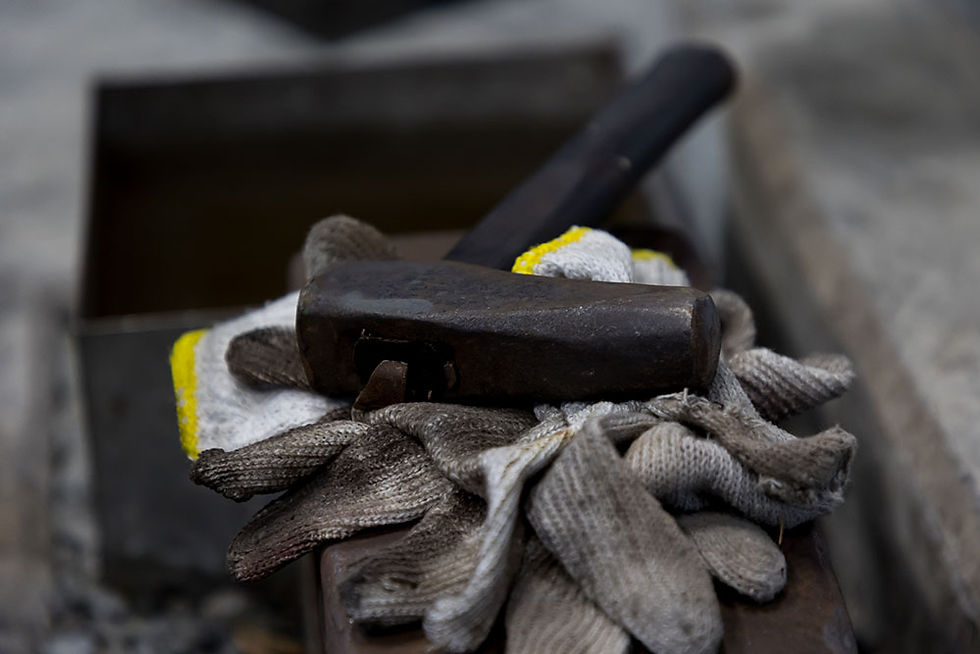
High-quality blade steel is inserted into a soft base metal, heated with fire, and repeatedly hammered and forged.
This process makes the metal structure denser, resulting in a sharp cutting edge, wear resistance, and toughness. Even in today's increasingly mechanized world, the hand-forging process is still carefully preserved in Tosa.
Another characteristic of Tosa is its "free forging" method.
Because the shape is formed by hammering and stretching heated iron without using molds, a wide variety of cutting tools can be produced relying solely on blueprints.
Our history of consistently meeting the demands for small-batch, high-mix production has fostered our technology.
The culture of Tosa forged blades
Kochi Prefecture is a mountainous region boasting a forest coverage rate of approximately 84%.
The culture of "field blacksmithing" has been nurtured through the creation of tools used in forestry and fishing.
Prioritizing practicality and eliminating unnecessary elements.
That philosophy is also reflected in the black finish.
By deliberately leaving the black oxide film created during forging, the metal is protected, the process is streamlined, and durability is enhanced.
This reflects a Tosa-style approach that prioritizes usability over appearance.


Tosa, the Land of Water
Water is an indispensable resource for blacksmithing.
In the quenching process, where red-hot steel is rapidly cooled, the water used determines the hardness and toughness of the blade.
Furthermore, water plays a crucial role in regulating temperature and stabilizing the work process during forging and grinding.
Therefore, the cutlery production areas of Tosa have historically spread along rivers.
In areas blessed with abundant water resources, such as the Niyodo River, the Shimanto River, and the Monobe River system around Ryugado Cave in Kami City, the practice of blacksmithing has taken root.
In an environment surrounded by mountains and rivers, a tradition of craftsmanship that involves working with fire and water has been quietly passed down through generations.

Tokuzo
Tokuzo works with blades within this tradition of Tosa's forging culture.
While cherishing the techniques that have been passed down,
It's about adapting things to suit our current lifestyle.
However, the bladed weapon itself is not the main focus.
The real stars are the hands of the people who use it, and their daily activities.
Whether in a professional chef's kitchen or a home kitchen.
As a tool, a bladed weapon is designed to be used in the hands of its user.
I quietly support that work.
It fits comfortably in the user's hand.
A bottle that grows and improves with time.
With Tosa's forging culture as its background,
Tokuzo's knives are tools that become familiar and cherished by the user.
We want to deliver it to you.





Work with forged blades
Tosa-uchi hamono (Tosa forged blades) craftsmanship is broadly divided into three stages: "forging," "sharpening," and "handle-making."
Some artisans complete every process by themselves, while others specialize solely in forging, sharpening, or handle-making.
Please watch the videos to see the workflow of each process.


The origins of Tosa cutlery can be traced back to the late Kamakura period.
In 1306 (Tokuji 1), the swordsmithing techniques of those who moved from Yamato Province to Tosa took root in this region. Later, during the Sengoku period, Chosokabe Motochika invited skilled swordsmiths, further refining the forging techniques.
During the Edo period, the craft expanded to include farming tools and everyday implements, and this tradition, passed down for over 400 years, continues to this day as Tosa cutlery.